Melanotan-1 vs Melanotan-2
The table compares the compounds’ key data from their entry pages. Open each compound’s full entry for details. Educational content, not medical advice.
 Melanotan-1 (Afamelanotide) | 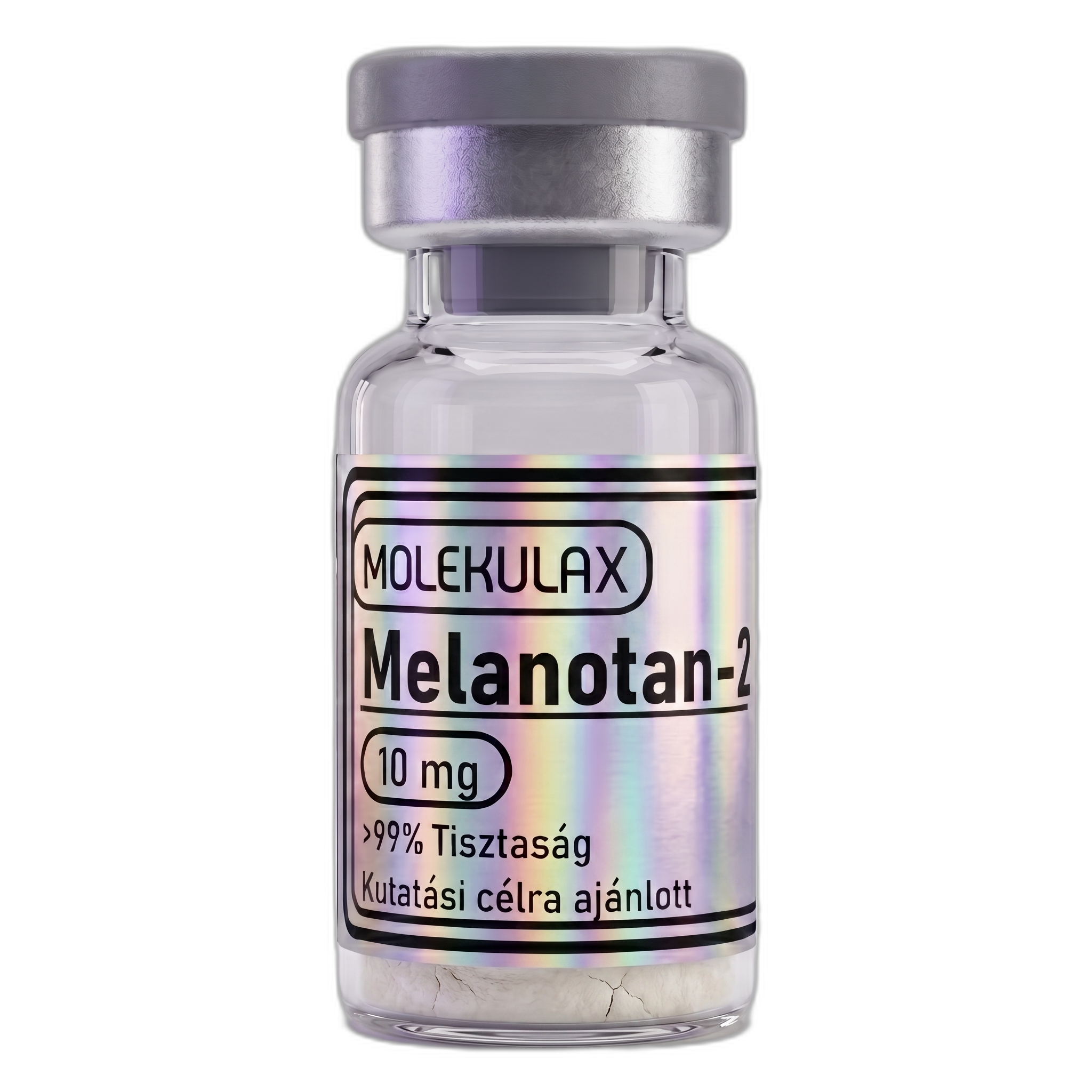 Melanotan-2 | |
|---|---|---|
| What it is | Approved medicine for a sunlight-sensitivity condition called EPP; a man-made version of a hormone that regulates skin colour. | Experimental tan-boosting peptide that also acts on libido and appetite; few studies in humans so far. |
| Type | α-MSH analog | Cyclic heptapeptide (MC1-5R agonist) |
| Structure | [Nle4, D-Phe7]-α-MSH | Ac-Nle-cyclo[Asp-His-D-Phe-Arg-Trp-Lys]-NH₂ |
| Status | FDA approved (EPP) | — |
| Route | SC implant | — |
| Storage | 2–8°C | 2–8°C (reconstituted) |
| Molecular weight | — | ~1024 Da |
| Target area | — | Skin pigmentation, libido |
| Stability | — | 25–30 days (reconstituted) |
| Full entry | Open → | Open → |
Melanotan-1 or Melanotan-2: what is the difference?
Both are man-made versions of α-MSH, the hormone that regulates skin colour, and both boost the production of melanin, the brown skin pigment. Their structures differ: according to its entry Melanotan-1 (afamelanotide) is [Nle4, D-Phe7]-α-MSH, while Melanotan-2 is a ring-shaped peptide of seven amino acids. Melanotan-2 switches on several similar receptors, so according to its entry it also acts on sexual desire and appetite. The biggest difference is status: the FDA approved Melanotan-1 in 2019 as Scenesse for EPP, a condition with sensitivity to sunlight, and its other uses are of a research nature; Melanotan-2 is an experimental compound, with only a few small studies in humans so far.