Epithalon
Experimental peptide studied in aging research: lifespan rose in animal studies, but human data are limited.


The links above are labelled third-party affiliate links. MolekulaX does not sell and does not verify product quality.
DETAILED OVERVIEW
What is Epithalon?
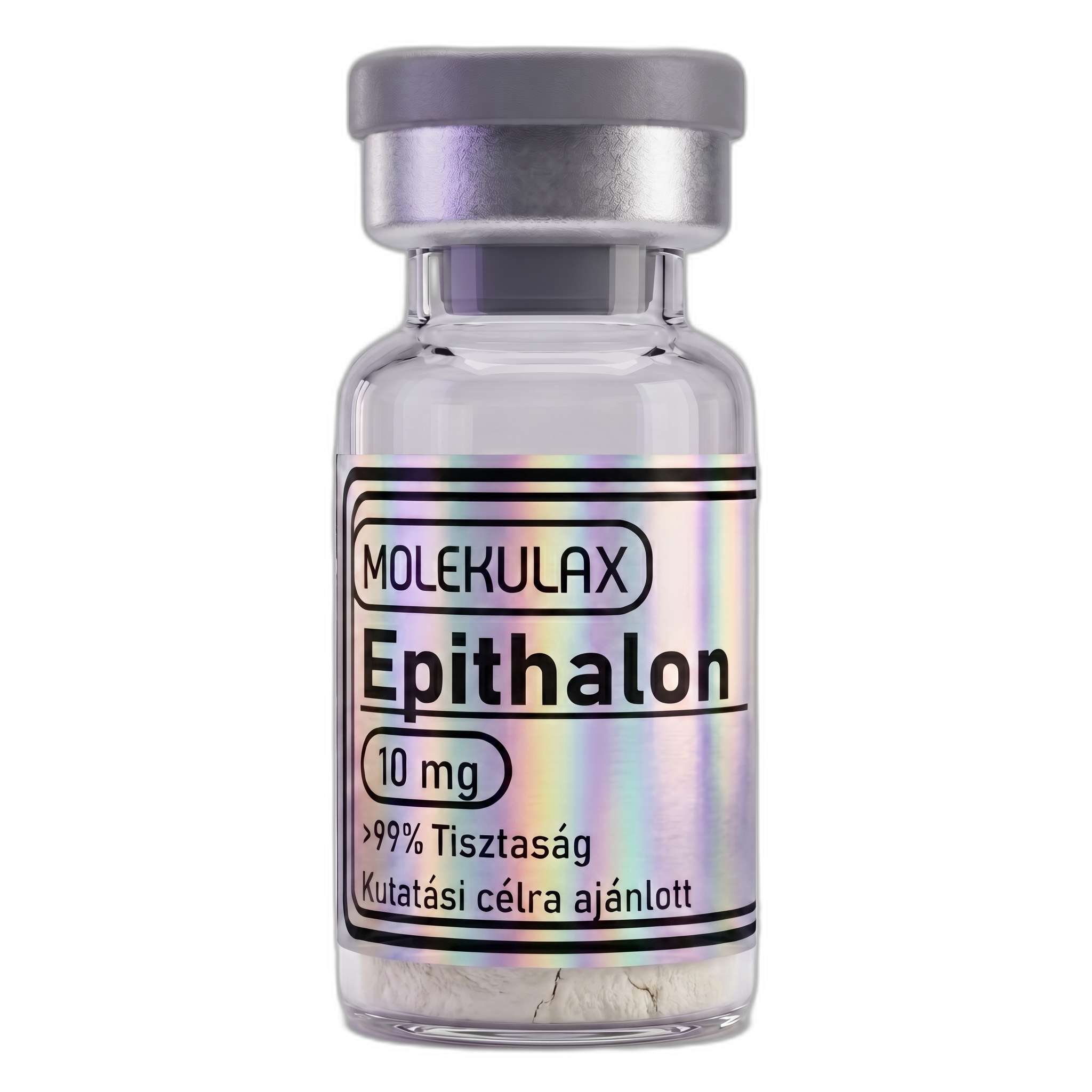
Epithalon is a synthetic peptide, a short protein chain of four amino acids. It was developed from a peptide extract of the pineal gland (a gland in the brain that produces the hormone melatonin) and is a synthetic version of a substance called epitalamin. It is studied in aging research.
Its investigated effects include normalizing melatonin production, activating an enzyme called telomerase (so that telomeres, the protective ends of chromosomes, may lengthen) and antioxidant action. An increase in lifespan has been described in animal studies. In humans, however, only a few small studies have been done, and clinical data are limited.
Type
Synthetic tetrapeptide
Structure
Ala-Glu-Asp-Gly
Molecular weight
~390 Da
Target area
Pineal, telomere, aging
Storage
2–8°C (reconstituted)
Stability
25–30 days (reconstituted)
Cellular renewal
The peptide acts on several aging fundamentals: telomerase activation slows telomere shortening; oxidative stress drops (Nrf2 / glutathione system); gene-expression patterns epigenetically normalize. Mitochondrial energy production improves, tissue-specific stem-cell activity is supported. On skin: collagen I/III synthesis rises, wrinkle depth shrinks, hydration and elasticity improve. Long-term, biomarkers (CRP, glucose, lipids) show younger patterns and epigenetic age can slow.
Epithalon is not acutely felt – its effects are subtle and gradual. Anecdotal accounts from multiple users describe slightly improved sleep onset (time to fall asleep) and deeper rest, both consistently noted as positive. Over time, recovery feels improved (placebo cannot be ruled out), and sleep becomes more consistent day-to-day after roughly four weeks of pre-bed dosing. DSIP is often considered a more reliable first-line sleep peptide, with Epithalon serving as a secondary option. It is well-suited for users needing background circadian-rhythm support.
Epithalon is typically administered in short cycles (several days to weeks) via subcutaneous injection. It is most often dosed before bed, as users tend to feel sleepy following administration.
⚠ Not clinical evidence – based on user accounts.
Data console
Lab data
Khavinson VK, Linkova NS, Ashapkin VV, Shilovsky GA, Borushko NV (2023). [KE peptide regulates SIRT1, PARP1, PARP2 gene expression and protein synthesis in human mesenchymal stem cells aging.].. Adv Gerontol. 2023;36(3):302-312..
Research indications
Investigated uses and mechanisms
Cellular renewal
Telomerase activation; preserves cell-division capacity.
Epigenetic modulation
Normalizes age-specific gene-expression patterns.
Oxidative stress
Increases antioxidant capacity; mitochondrial health.
Reconstitution
How to prepare, step by step
Important
Sterile technique required. Use bacteriostatic water (BAC) only. Never distilled or tap water.
- 01
Remove the vial and bacteriostatic water (BAC) from refrigeration; let them reach room temp for 5 minutes.
- 02
Wipe both vial stoppers with an alcohol swab.
- 03
Draw 2 ml of BAC water into a sterile syringe (typical for the 10 mg vial).
- 04
Inject slowly down the side of the vial, do NOT spray directly onto the peptide powder.
- 05
Swirl gently in a circular motion until dissolved (~30 s), do not shake.
- 06
Wait for the solution to become clear. If sediment or discoloration appears, discard it.
- 07
Label the vial with reconstitution date and concentration.
- 08
Store at 2–8 °C, protected from light. Inspect visually before each use.
Quality indicators
How to recognize a pure peptide
Purity markers
4White / off-white powder
Typical appearance of sterile lyophilized peptide.
Comes with COA (Certificate of Analysis)
Independent lab analysis, ≥98% purity.
Intact, sealed vial
Rubber stopper + aluminum crimp intact, ensuring sterility.
Dissolves clear
Clear solution after reconstitution, no sediment.
Use caution
1Storage temperature
Extended room-temp exposure may reduce potency.
Do not use
2Discoloration / sediment
Yellow, cloudy or particulate solution, indicates degradation, do not use.
Damaged packaging
Cracked vial or loose cap, sterility compromised, discard.
Safety
Side effects, stop signs, contraindications
Side effects · 3
- Transient irritation at site
- Mild headache
- Mild fatigue in first 1–2 weeks
Contraindications · 5
- Pregnancy and breastfeeding
- Active malignancy
- Known allergy to the peptide or its components
- Severe hepatic or renal impairment (medical consultation required)
- Age under 18
Related Peptides
Same therapeutic category
Studies
Related research and clinical findings
Telegram
Have a question about Epithalon?
Reach out to an advisor on Telegram. We can help you find the right peptide.
Personalized consultation
Want a detailed conversation tailored to your data?
Fill out the prep intake form (your goals, training and health data), and the advisor prepares from it to give genuinely personalized guidance.
Fill out the form~5–7 min · prep questionnaire · confidential · GDPR-compliant
The information here is strictly for educational and scientific purposes. It does not replace medical advice or clinical consultation, and it does not encourage illegal substance or pharmaceutical use. Data is sourced. When in doubt, consult your doctor.