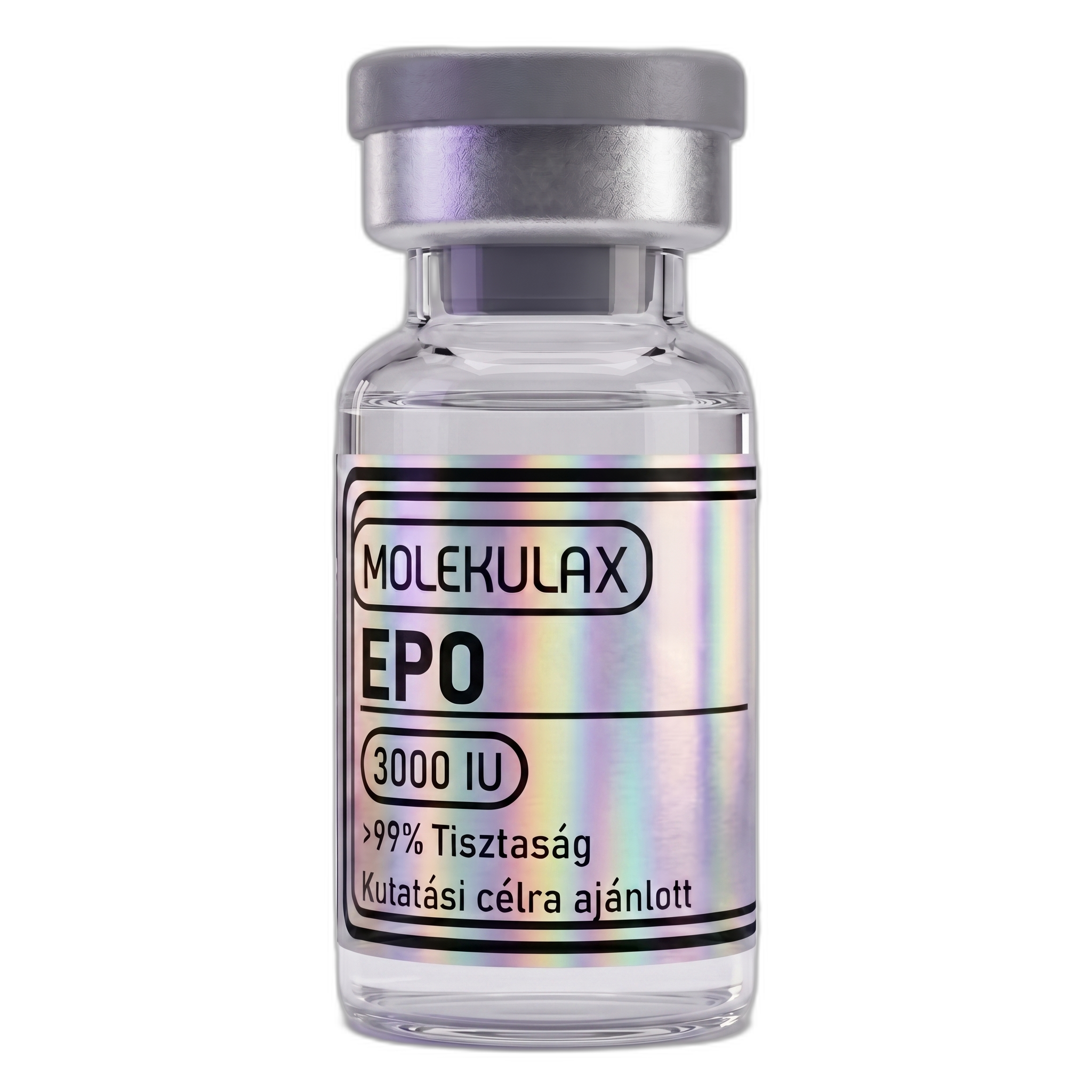
EPO
Erythropoietin – EPO-receptor agonist 165-AA glycoprotein. CKD anemia treatment (clinical Rx); WADA-strictly-banned in endurance-doping context.

The links above are labelled third-party affiliate links. MolekulaX does not sell and does not verify product quality.
DETAILED OVERVIEW
What is EPO?
Erythropoietin (EPO) is a 165-amino-acid glycoprotein cytokine (~30 kDa), endogenously produced by the kidney's peritubular interstitial cells (~90%) and to a small extent by the liver (~10%). The exogenous recombinant EPO (rhEPO) received FDA approval in 1989 from Amgen as Epogen (epoetin-alfa) for the treatment of chronic kidney disease (CKD) anemia – it was the first true recombinant therapeutic peptide blockbuster. Mechanism: EPO binds the EPO receptor (EPO-R) on the surface of erythroid progenitor cells (bone marrow BFU-E + CFU-E) → JAK2/STAT5 signaling cascade activation → erythroid survival + proliferation + differentiation → increase in RBC mass + hematocrit + oxygen-carrying capacity. Clinical Rx context (primary, ~75% of usage): CKD anemia (dialysis + pre-dialysis), chemotherapy-induced anemia (Procrit), HIV/AZT anemia, anemia of prematurity. Target Hb 10-12 g/dL – KDIGO 2024 cautions against Hb >12-13 g/dL targeting (TREAT, CHOIR, CREATE trial data: higher-target → cardiovascular events + stroke risk). Endurance-doping context (secondary, NOT endorsed): micro-dose protocols of 100-300 IU/kg/week documented since the 1990s (Lance Armstrong era), WADA-strictly-banned under S2.1 Erythropoietin-mimetic agents YEAR-ROUND (in + out-of-competition). Detection: serum/urine isoform analysis (IEF + SDS-PAGE) + biological passport hematocrit tracking. Sources: epoetin-alfa (Epogen Amgen, Procrit Janssen – same molecule), darbepoetin-alfa (Aranesp Amgen – hyperglycosylated, longer t1/2), methoxy-PEG-epoetin-beta (Mircera Roche – PEGylated, monthly dosing). MANDATORY bloodwork: Hb, Hct, ferritin, transferrin saturation, reticulocyte count, blood pressure (hypertension risk significant).
Mechanism
EPO receptor (EPO-R) agonist on erythroid progenitors → JAK2/STAT5 → RBC mass + Hct increase
Dosing (CKD epoetin-alfa)
50-100 IU/kg SC 3x/week, target Hb 10-12 g/dL
Dosing (darbepoetin)
0.45-0.75 mcg/kg SC weekly or biweekly
Half-life
Epoetin-alfa 4-13h SC / Darbepoetin 70-138h / Mircera ~135h
Legal status
FDA + EMA Rx (CKD anemia, chemo anemia), WADA S2.1 STRICTLY BANNED (in + out-of-competition)
Mandatory bloodwork
Hb, Hct, ferritin, transferrin-sat, reticulocyte count, blood pressure
Metabolic support
Glucose and lipid metabolism shift favorably: insulin sensitivity improves, glycemic swings and HbA1c drop, while LDL and triglycerides normalize. Body composition refines, fat mass decreases, lean mass is preserved or grows. Appetite is regulated both centrally and peripherally (GLP-1 / GIP / glucagon pathways), so caloric intake settles into a sustainable range without constant willpower. Energy expenditure and thermogenesis rise modestly.
Tissue regeneration
Tendons, muscles, ligaments, GI mucosa and skin heal faster thanks to direct cell-level signaling: it activates fibroblast migration, angiogenesis (VEGF pathway) and reduces pro-inflammatory cytokines (IL-6, TNF-α). Chronic, slow-healing injuries see functional improvement; pain and swelling drop. Post-workout recovery windows shorten by 30–50%, allowing more training volume. Effects are documented even in enthesopathy, tendinitis and GI ulcers.
No anecdote collected yet.
Data console
Lab data
Lundby C, Olsen NV. . Effects of recombinant human erythropoietin in normal humans. J Physiol. 2011;589(Pt 6):1265-71..
Jacobs C, Frei D, Perkins AC. . Results of the European Survey on Anaemia Management 2003 (ESAM 2003): current status of anaemia management in dialysis patients, factors affecting epoetin dosage and changes in anaemia management over the last 5 years. Nephrol Dial Transplant. 2005;20 Suppl 3:iii3-24..
Singh AK, Szczech L, Tang KL, et al. . Correction of anemia with epoetin alfa in chronic kidney disease (CHOIR trial). N Engl J Med. 2006;355(20):2085-98..
Research indications
Investigated uses and mechanisms
Weight regulation
Reduced appetite and increased energy expenditure via GLP-1 / GIP / glucagon agonism.
Type 2 diabetes
Improved insulin sensitivity and HbA1c reduction in clinical trials.
Cardiometabolic profile
Favorable shifts in lipid profile and blood pressure.
Quality indicators
How to recognize a pure peptide
Purity markers
4White / off-white powder
Typical appearance of sterile lyophilized peptide.
Comes with COA (Certificate of Analysis)
Independent lab analysis, ≥98% purity.
Intact, sealed vial
Rubber stopper + aluminum crimp intact, ensuring sterility.
Dissolves clear
Clear solution after reconstitution, no sediment.
Use caution
1Storage temperature
Extended room-temp exposure may reduce potency.
Do not use
2Discoloration / sediment
Yellow, cloudy or particulate solution, indicates degradation, do not use.
Damaged packaging
Cracked vial or loose cap, sterility compromised, discard.
Interactions & stacks
What to combine and what to avoid
GHK-Cu
SynergisticCopper peptide: skin regeneration and epigenetic modulation
Retatrutide
SynergisticTriple incretin agonist: metabolic health and weight loss
Berberine
SynergisticInsulin sensitivity + GLP-1 effects combine well.
Vitamin C / Zinc / B-complex
SynergisticSupports collagen synthesis and antioxidant capacity.
Metformin
ComplementaryMany clinical protocols combine them, supervision advised.
Caffeine
Requires timingCompatible with morning dosing; avoid late-day stacking.
NSAIDs (Ibuprofen, ASA)
Use cautionLong-term concurrent use may blunt regenerative effects.
Alcohol
AvoidReduces recovery and increases side-effect risk.
Safety
Side effects, stop signs, contraindications
Side effects · 5
- Nausea, headache, especially during titration
- Appetite and bowel-motility shifts
- Local skin reaction at injection site
- Transient blood-sugar variability (esp. in diabetics)
- Mild heart-rate increase
Contraindications · 5
- Pregnancy and breastfeeding
- Active malignancy
- Known allergy to the peptide or its components
- Severe hepatic or renal impairment (medical consultation required)
- Age under 18
Related Peptides
Same therapeutic category
Studies
Related research and clinical findings
Effects of recombinant human erythropoietin in normal humans
Lundby C, Olsen NV.
Results of the European Survey on Anaemia Management 2003 (ESAM 2003): current status of anaemia management in dialysis patients, factors affecting epoetin dosage and changes in anaemia management over the last 5 years
Jacobs C, Frei D, Perkins AC.
Correction of anemia with epoetin alfa in chronic kidney disease (CHOIR trial)
Singh AK, Szczech L, Tang KL, et al.
Telegram
Have a question about EPO?
Reach out to an advisor on Telegram. We can help you find the right peptide.
Personalized consultation
Want a detailed conversation tailored to your data?
Fill out the prep intake form (your goals, training and health data), and the advisor prepares from it to give genuinely personalized guidance.
Fill out the form~5–7 min · prep questionnaire · confidential · GDPR-compliant
The information here is strictly for educational and scientific purposes. It does not replace medical advice or clinical consultation, and it does not encourage illegal substance or pharmaceutical use. Data is sourced. When in doubt, consult your doctor.