GHK‑Cu
Copper peptide: skin regeneration and epigenetic modulation



The links above are labelled third-party affiliate links. MolekulaX does not sell and does not verify product quality.
DETAILED OVERVIEW
What is GHK-Cu?
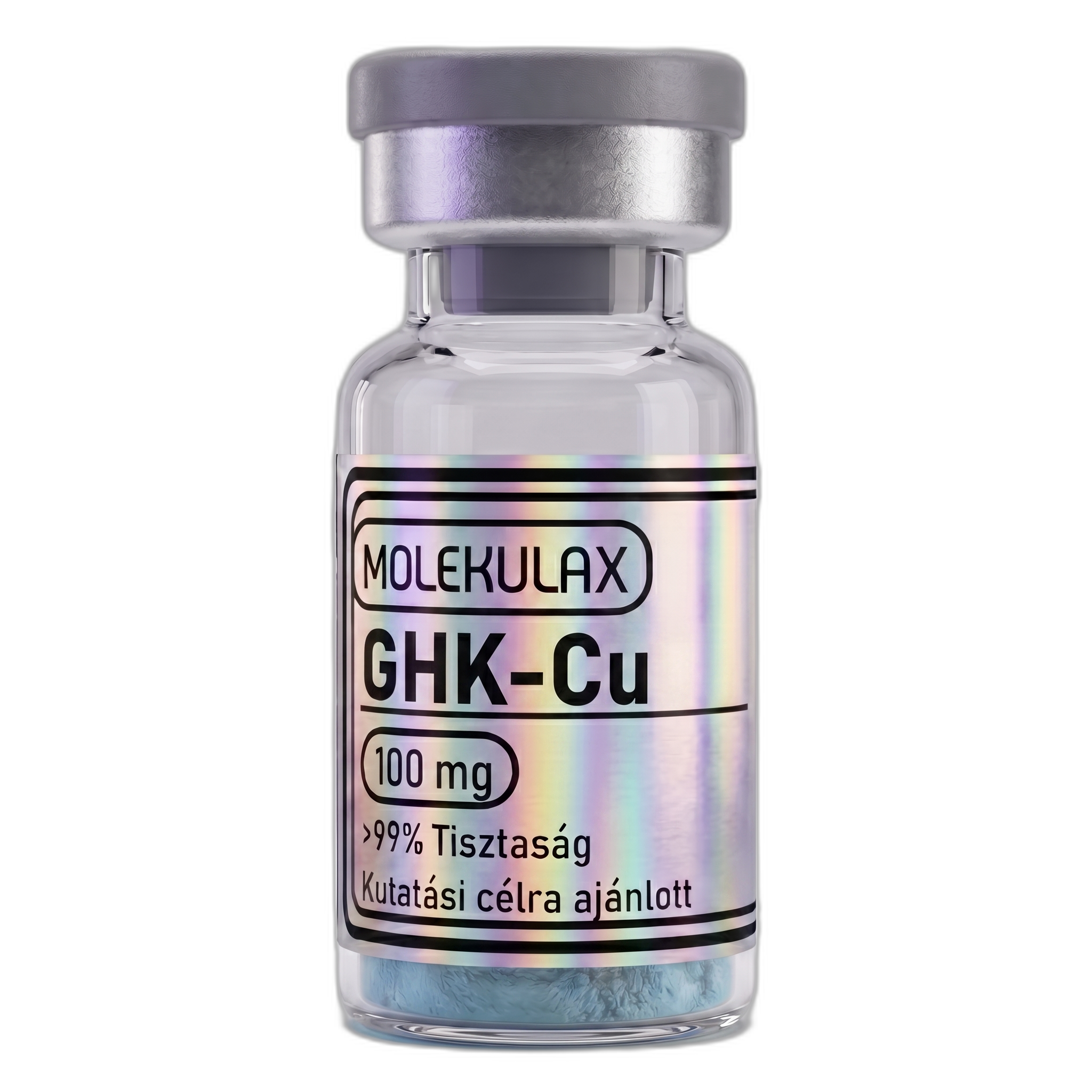
GHK-Cu (glycyl-histidyl-lysine-copper) is a naturally occurring copper-binding tripeptide identified in human plasma, urine and saliva. It is present at high levels in youth (~200 ng/ml) and gradually declines with age (~80 ng/ml by age 60). When bound to copper(II), the peptide activates collagen and elastin synthesis, accelerates wound healing, stimulates angiogenesis, and modulates the expression of more than 32 genes through epigenetic mechanisms. Research suggests antioxidant, anti-inflammatory and neuroprotective effects.
Type
Copper-binding tripeptide
Structure
Gly-His-Lys · Cu²⁺
Molecular weight
340 Da
Target area
Skin, wounds, hair, bone
Storage
2–8°C, protected from light
Stability
25–30 days (reconstituted)
Cellular renewal
The peptide acts on several aging fundamentals: telomerase activation slows telomere shortening; oxidative stress drops (Nrf2 / glutathione system); gene-expression patterns epigenetically normalize. Mitochondrial energy production improves, tissue-specific stem-cell activity is supported. On skin: collagen I/III synthesis rises, wrinkle depth shrinks, hydration and elasticity improve. Long-term, biomarkers (CRP, glucose, lipids) show younger patterns and epigenetic age can slow.
Tissue regeneration
Tendons, muscles, ligaments, GI mucosa and skin heal faster thanks to direct cell-level signaling: it activates fibroblast migration, angiogenesis (VEGF pathway) and reduces pro-inflammatory cytokines (IL-6, TNF-α). Chronic, slow-healing injuries see functional improvement; pain and swelling drop. Post-workout recovery windows shorten by 30–50%, allowing more training volume. Effects are documented even in enthesopathy, tendinitis and GI ulcers.
Skin / sexual health
Melanocortin (MC1R / MC4R) receptor activation produces two main effects: skin pigmentation (melanin synthesis, UV protection, cosmetic) and centrally-mediated libido / sexual response. The peptide also supports collagen I/III and elastin synthesis, improving skin elasticity and texture, youth markers measurably rise. Acute effect (libido, energy) often within 30–60 min; lasting effects (tone, pigmentation) build over 1–3 weeks. Routine mole checks recommended.
Anecdotal reports describe long-term GHK-Cu administration at 2.5 mg daily producing noticeable skin and hair quality benefits within roughly two weeks, with improvements persisting over a year of use. Users commonly note sustained skin quality, though definitive healing claims remain difficult to verify outside controlled settings.
GHK-Cu is one of the more affordable peptides. It can be administered topically or via subcutaneous injection, with most users preferring injection for systemic benefits. For topical applications, GHK-Cu powder is typically mixed into a moisturizer and applied; dosing varies with the quantity and quality of the powder used.
⚠ Not clinical evidence – based on user accounts.
Data console
Lab data
Pickart L, Margolina A. (2025). Topically applied GHK as an anti-wrinkle peptide. International Journal of Cosmetic Science.
Pickart L, Vasquez-Soltero JM, Margolina A (2015). GHK Peptide as a Natural Modulator of Multiple Cellular Pathways in Skin Regeneration.. Biomed Research International.
Pickart L, Margolina A (2018). Regenerative and Protective Actions of the GHK-Cu Peptide in the Light of the New Gene Data.. Int J Mol Sci. 2018;19(7):1987..
Pyo HK, Yoo HG, Won CH, et al. (2021). The effect of tripeptide-copper complex on human hair growth in vitro.. Annals of Dermatology.
Research indications
Investigated uses and mechanisms
Cellular renewal
Telomerase activation; preserves cell-division capacity.
Epigenetic modulation
Normalizes age-specific gene-expression patterns.
Oxidative stress
Increases antioxidant capacity; mitochondrial health.
Reconstitution
How to prepare, step by step
Important
Sterile technique required. Use bacteriostatic water (BAC) only. Never distilled or tap water.
- 01
Remove the vial and bacteriostatic water (BAC) from refrigeration; let them reach room temp for 5 minutes.
- 02
Wipe both vial stoppers with an alcohol swab.
- 03
Draw 2 ml of BAC water into a sterile syringe (typical for the 5 mg vial).
- 04
Inject slowly down the side of the vial, do NOT spray directly onto the peptide powder.
- 05
Swirl gently in a circular motion until dissolved (~30 s), do not shake.
- 06
Wait for the solution to become clear. If sediment or discoloration appears, discard it.
- 07
Label the vial with reconstitution date and concentration.
- 08
Store at 2–8 °C, protected from light. Inspect visually before each use.
Quality indicators
How to recognize a pure peptide
Purity markers
4White / off-white powder
Typical appearance of sterile lyophilized peptide.
Comes with COA (Certificate of Analysis)
Independent lab analysis, ≥98% purity.
Intact, sealed vial
Rubber stopper + aluminum crimp intact, ensuring sterility.
Dissolves clear
Clear solution after reconstitution, no sediment.
Use caution
1Storage temperature
Extended room-temp exposure may reduce potency.
Do not use
2Discoloration / sediment
Yellow, cloudy or particulate solution, indicates degradation, do not use.
Damaged packaging
Cracked vial or loose cap, sterility compromised, discard.
Interactions & stacks
What to combine and what to avoid
Matrixyl 3000
SynergisticCollagen-signalling peptide matrix, anti-ageing topical
SS-31 (Elamipretide)
SynergisticMitochondrial tetrapeptide, cardiolipin-targeted protection
NAD+
SynergisticSirtuin activation + epigenetic modulation.
Vitamin C / Zinc / B-complex
SynergisticSupports collagen synthesis and antioxidant capacity.
Caffeine
Requires timingCompatible with morning dosing; avoid late-day stacking.
Rapamycin
Use cautionmTOR-suppression effect may be amplified, consult specialist.
NSAIDs (Ibuprofen, ASA)
Use cautionLong-term concurrent use may blunt regenerative effects.
Alcohol
AvoidReduces recovery and increases side-effect risk.
Safety
Side effects, stop signs, contraindications
Side effects · 3
- Transient irritation at site
- Mild headache
- Mild fatigue in first 1–2 weeks
Contraindications · 5
- Pregnancy and breastfeeding
- Active malignancy
- Known allergy to the peptide or its components
- Severe hepatic or renal impairment (medical consultation required)
- Age under 18
Related Peptides
Same therapeutic category
Studies
Related research and clinical findings
Topically applied GHK as an anti-wrinkle peptide
Pickart L, Margolina A.
Topical GHK formulations clinically reduce wrinkles and increase skin hydration and collagen content.
GHK Peptide as a Natural Modulator of Multiple Cellular Pathways in Skin Regeneration.
Pickart L, Vasquez-Soltero JM, Margolina A
GHK-Cu activates collagen and GAG synthesis, reduces inflammatory cytokines and epigenetically modulates gene expression.
Regenerative and Protective Actions of the GHK-Cu Peptide in the Light of the New Gene Data.
Pickart L, Margolina A
The peptide influences expression of more than 32 genes, including collagen, antioxidant and tissue-repair genes.
The effect of tripeptide-copper complex on human hair growth in vitro.
Pyo HK, Yoo HG, Won CH, et al.
Topical GHK-Cu significantly reduced hair loss and increased hair density vs placebo.
Telegram
Have a question about GHK‑Cu?
Reach out to an advisor on Telegram. We can help you find the right peptide.
Personalized consultation
Want a detailed conversation tailored to your data?
Fill out the prep intake form (your goals, training and health data), and the advisor prepares from it to give genuinely personalized guidance.
Fill out the form~5–7 min · prep questionnaire · confidential · GDPR-compliant
The information here is strictly for educational and scientific purposes. It does not replace medical advice or clinical consultation, and it does not encourage illegal substance or pharmaceutical use. Data is sourced. When in doubt, consult your doctor.