Transl Androl Urol. 2013;2(3):195-202.
Use of human chorionic gonadotropin in men
Crosnoe LE, Grober E, Ohl D, Kim ED.
Human Chorionic Gonadotropin – LH-receptor agonist glycoprotein. Fertility induction (male hypogonadism + IVF), spermatogenesis restoration, HPTA-recovery in clinical Rx framing.


The links above are labelled third-party affiliate links. MolekulaX does not sell and does not verify product quality.
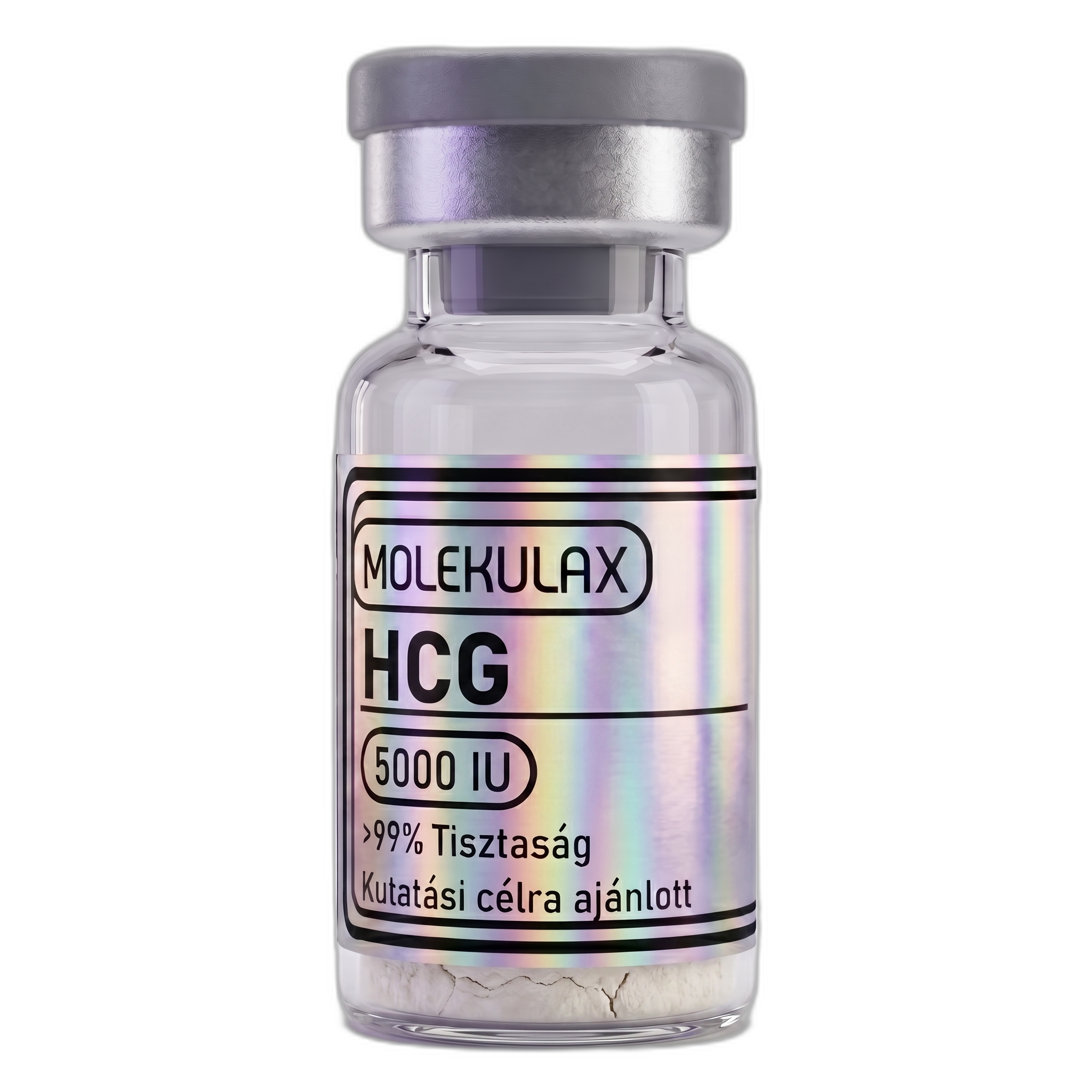
DETAILED OVERVIEW
HCG (Human Chorionic Gonadotropin) is a 244-amino-acid heterodimeric glycoprotein (α + β subunit), structurally an LH analog with ~80% sequence identity on the β subunit. Endogenous source: pregnancy placental syncytiotrophoblast. In the fertility-clinic context, HCG functions as exogenous LH replacement: a Leydig-cell LHCGR receptor agonist that activates testosterone biosynthesis and plays a critical role in maintaining intratesticular testosterone (ITT) – the ITT concentration is 50-100× higher than serum testosterone (~600-1200 nmol/L vs. ~10-30 nmol/L serum), and this high-ITT environment is an absolute requirement for Sertoli-supported spermatogenesis. Clinical HCG sources: (1) urinary-extracted (uHCG) – purified from pregnant women's urine (Pregnyl Organon 1973, Novarel Ferring, Choragon Ferring EU); (2) recombinant (rHCG / choriogonadotropin alfa) – CHO-cell-expressed, higher purity, lower immunogenicity (Ovidrel Serono/Merck USA, Ovitrelle EMA). Clinical indications: (a) male hypogonadotropic hypogonadism (HH, Kallmann syndrome, pituitary insufficiency) – testosterone restoration via the Leydig-cell pathway; (b) spermatogenesis induction in HH patients (HCG monotherapy is often insufficient; HMG or rFSH co-administration is required for complete spermatogenesis initiation); (c) clinical HPTA-recovery protocol after endogenous testosterone suppression (idiopathic secondary hypogonadism, corticosteroid- or opioid-induced HPTA suppression); (d) IVF male-factor – oligospermia / azoospermia treated with a combined gonadotropin protocol. Cross-frame note: this is the `hcg-peptid` entry – fertility-clinic Rx framing. The `hcg-perf` counterpart entry (performance library) covers the same molecule in the AAS-PCT bridge context (atrophy prevention, doping narrative). IDENTICAL molecule, different narrative: the patient/user receives the same Pregnyl/Ovitrelle vial – only with a different intent and a different medical framing.
Mechanism
LHCGR receptor agonist (Leydig cell) → ITT elevation → Sertoli-supported spermatogenesis
Clinical dose (HH)
1500-2500 IU SC/IM 2-3x/week × 6-24 months
HPTA-recovery dose
500-1500 IU SC 2-3x/week × 4-6 weeks, then SERM transition
Half-life
uHCG ~24-36 h; rHCG (Ovidrel/Ovitrelle) ~38 h
Onset
Acute Test rise 24-48 h; spermatogenesis recovery 3-6 months
Storage
Lyophilized vial at room temp; reconstituted solution 2-8°C max 30 days
Growth hormone release
The peptide acts on pituitary GHRH or GHS receptors, producing a physiological, pulsatile GH release, unlike synthetic rHGH, which keeps levels flat and leads to desensitization. IGF-1 rises into the upper-normal range, driving recovery, muscle protein synthesis, lipolysis and skin quality. Deep-sleep phases lengthen; collagen and bone-matrix synthesis activate. The effect is reversible and does not suppress the endogenous GH axis.
Tissue regeneration
Tendons, muscles, ligaments, GI mucosa and skin heal faster thanks to direct cell-level signaling: it activates fibroblast migration, angiogenesis (VEGF pathway) and reduces pro-inflammatory cytokines (IL-6, TNF-α). Chronic, slow-healing injuries see functional improvement; pain and swelling drop. Post-workout recovery windows shorten by 30–50%, allowing more training volume. Effects are documented even in enthesopathy, tendinitis and GI ulcers.
No anecdote collected yet.
Data console
Crosnoe LE, Grober E, Ohl D, Kim ED. . Use of human chorionic gonadotropin in men. Transl Androl Urol. 2013;2(3):195-202..
Hill ED, Honig SC, Tabb KE, et al. . Hypogonadism therapy and fertility outcomes. Int J Impot Res. 2018;30(6):262-269..
Coviello AD, Matsumoto AM, Bremner WJ, et al. . Low-dose human chorionic gonadotropin maintains intratesticular testosterone in normal men with testosterone-induced gonadotropin suppression. J Clin Endocrinol Metab. 2005;90(5):2595-2602..
Depenbusch M, von Eckardstein S, Simoni M, Nieschlag E. . Maintenance of spermatogenesis in hypogonadotropic hypogonadal men with human chorionic gonadotropin alone. Eur J Endocrinol. 2002;147(5):617-624..
Research indications
Growth hormone release
Mimics physiological pulsatile GH secretion; IGF-1 rise.
Recovery & body comp
Muscle mass gain, fat reduction, post-workout recovery.
Sleep quality
Deep-sleep (N3) phases lengthen.
Quality indicators
Purity markers
4White / off-white powder
Typical appearance of sterile lyophilized peptide.
Comes with COA (Certificate of Analysis)
Independent lab analysis, ≥98% purity.
Intact, sealed vial
Rubber stopper + aluminum crimp intact, ensuring sterility.
Dissolves clear
Clear solution after reconstitution, no sediment.
Use caution
1Storage temperature
Extended room-temp exposure may reduce potency.
Do not use
2Discoloration / sediment
Yellow, cloudy or particulate solution, indicates degradation, do not use.
Damaged packaging
Cracked vial or loose cap, sterility compromised, discard.
Interactions & stacks
IGF-1 LR3
SynergisticLong-half-life IGF-1 analog, anabolic signalling
HMG (fertilitás)
SynergisticHuman Menopausal Gonadotropin: FSH+LH 1:1 spermatogenesis induction
Ipamorelin
SynergisticGHRH + GHRP, classic pulsatile GH stack.
Vitamin C / Zinc / B-complex
SynergisticSupports collagen synthesis and antioxidant capacity.
Caffeine
Requires timingCompatible with morning dosing; avoid late-day stacking.
Insulin
Use cautionContinuous glucose monitoring required.
NSAIDs (Ibuprofen, ASA)
Use cautionLong-term concurrent use may blunt regenerative effects.
Alcohol
AvoidReduces recovery and increases side-effect risk.
Safety
Side effects · 5
Contraindications · 5
Related Peptides
Studies
Crosnoe LE, Grober E, Ohl D, Kim ED.
Hill ED, Honig SC, Tabb KE, et al.
Coviello AD, Matsumoto AM, Bremner WJ, et al.
Depenbusch M, von Eckardstein S, Simoni M, Nieschlag E.
Telegram
Reach out to an advisor on Telegram. We can help you find the right peptide.
Personalized consultation
Fill out the prep intake form (your goals, training and health data), and the advisor prepares from it to give genuinely personalized guidance.
Fill out the form~5–7 min · prep questionnaire · confidential · GDPR-compliant
The information here is strictly for educational and scientific purposes. It does not replace medical advice or clinical consultation, and it does not encourage illegal substance or pharmaceutical use. Data is sourced. When in doubt, consult your doctor.