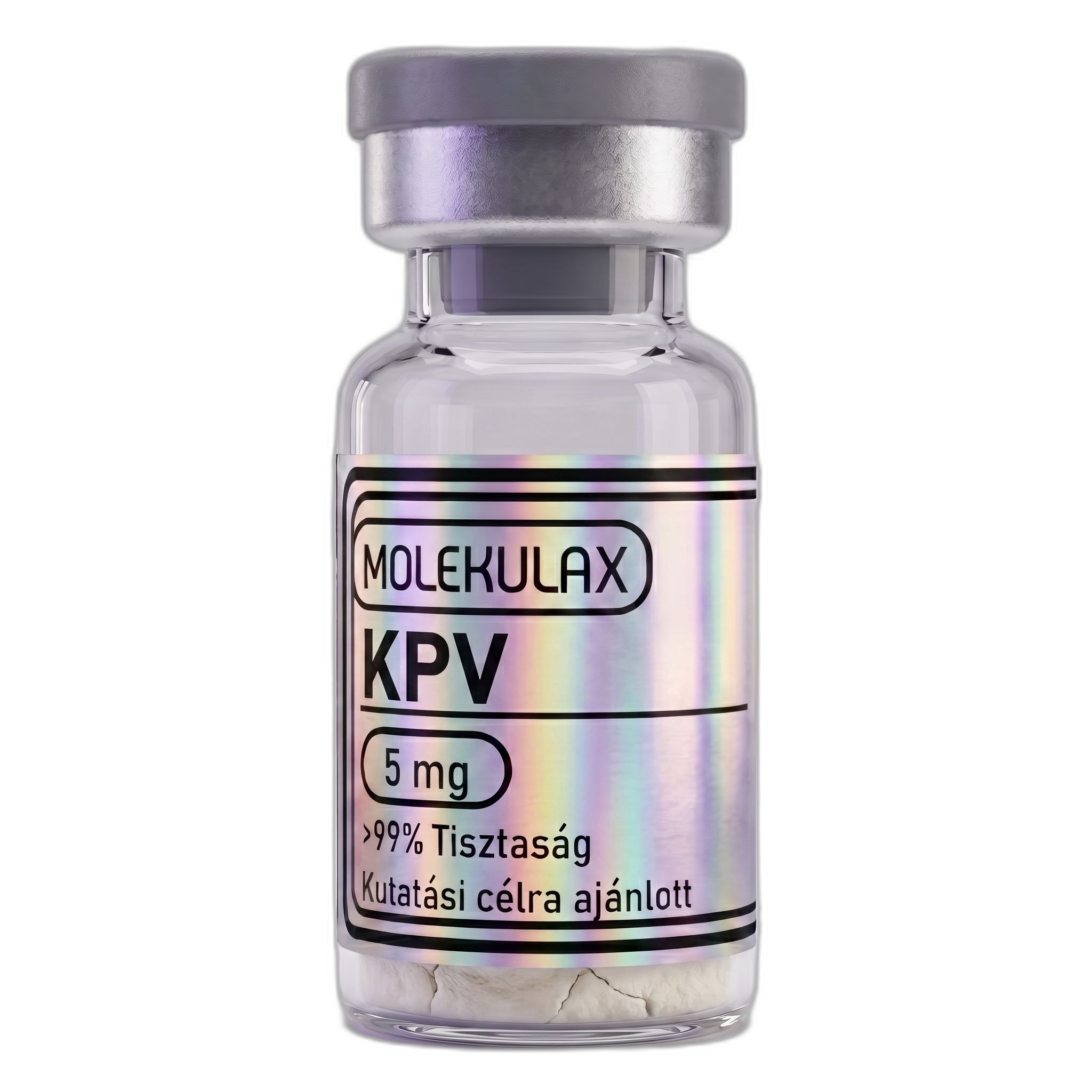
KPV
Experimental anti-inflammatory peptide, the final section of the hormone α-MSH; studied mainly in animals, not proven in humans.


The links above are labelled third-party affiliate links. MolekulaX does not sell and does not verify product quality.
DETAILED OVERVIEW
What is KPV?
KPV is an experimental peptide made of only three amino acids (lysine, proline and valine). It is the final section of a hormone called α-MSH and is being studied for its anti-inflammatory effect. It is considered a research compound.
In laboratory and animal models it reduced the level of substances that promote inflammation and the severity of disease in models of inflammatory bowel disease and skin disease. Researchers say it acts by blocking the cell signalling pathway that starts inflammation. It has so far been studied mainly in animals and is not proven in humans.
Type
α-MSH fragment
Structure
Lys-Pro-Val
Status
Research
Route
SC or oral
Storage
2–8°C
GI tract protection
Directly stimulates gut-mucosal regeneration: epithelial renewal, tight-junction restoration, mucosal thickness normalization. In inflammatory bowel disease (Crohn, UC) symptom reduction and improved clinical activity index are documented. In functional GI disorders (IBS, FD) bloating, pain and discomfort drop. Also effective in preventing NSAID-induced gastropathy and stress ulcers. Microbiome-friendly anti-inflammatory profile.
Immune modulation
Bidirectional immune regulation: in underactive immunity it supports T-cell maturation, NK activity and antibody response, while in chronic overactive (autoimmune) processes it drives Treg activation and inflammation reduction. Thymic regeneration (especially with age), faster flu / viral clearance and reduced chronic infections are documented. CRP, IL-6 and other inflammatory markers measurably drop with longer use. Not a replacement for immunosuppressives, complementary.
Anecdotal reports describe KPV administered subcutaneously easing severe arthritis symptoms for the duration of use, with community accounts noting symptom reductions within a few days. One user reported skin irritation clearing partially after one week of use. KPV is more purely anti-inflammatory than regenerative, so it is commonly stacked with BPC-157 or TB-500 to broaden the spectrum of healing factors.
Dosing depends on goals. KPV can be administered orally or via subcutaneous injection; oral capsule formulations are available. Topical use varies depending on the formulation. It is typically administered for a few weeks at a time, based on the user's symptom course.
⚠ Not clinical evidence – based on user accounts.
Data console
Lab data
Brzoska T, Luger TA, Maaser C, et al. (2008). Alpha-melanocyte-stimulating hormone and related tripeptides: biochemistry, antiinflammatory and protective effects in vitro and in vivo.. Endocr Rev.
Research indications
Investigated uses and mechanisms
Inflammatory bowel disease
Crohn / ulcerative colitis symptom reduction; mucosal regeneration.
Functional GI disorders
IBS / FD symptom improvement.
Reconstitution
How to prepare, step by step
Important
Sterile technique required. Use bacteriostatic water (BAC) only. Never distilled or tap water.
- 01
Remove the vial and bacteriostatic water (BAC) from refrigeration; let them reach room temp for 5 minutes.
- 02
Wipe both vial stoppers with an alcohol swab.
- 03
Draw 2 ml of BAC water into a sterile syringe (typical for the 5 mg vial).
- 04
Inject slowly down the side of the vial, do NOT spray directly onto the peptide powder.
- 05
Swirl gently in a circular motion until dissolved (~30 s), do not shake.
- 06
Wait for the solution to become clear. If sediment or discoloration appears, discard it.
- 07
Label the vial with reconstitution date and concentration.
- 08
Store at 2–8 °C, protected from light. Inspect visually before each use.
Quality indicators
How to recognize a pure peptide
Purity markers
4White / off-white powder
Typical appearance of sterile lyophilized peptide.
Comes with COA (Certificate of Analysis)
Independent lab analysis, ≥98% purity.
Intact, sealed vial
Rubber stopper + aluminum crimp intact, ensuring sterility.
Dissolves clear
Clear solution after reconstitution, no sediment.
Use caution
1Storage temperature
Extended room-temp exposure may reduce potency.
Do not use
2Discoloration / sediment
Yellow, cloudy or particulate solution, indicates degradation, do not use.
Damaged packaging
Cracked vial or loose cap, sterility compromised, discard.
Safety
Side effects, stop signs, contraindications
Side effects · 3
- Transient bloating
- Mild injection-site pain
- Appetite shift
Contraindications · 5
- Pregnancy and breastfeeding
- Active malignancy
- Known allergy to the peptide or its components
- Severe hepatic or renal impairment (medical consultation required)
- Age under 18
Related Peptides
Same therapeutic category
Studies
Related research and clinical findings
Telegram
Have a question about KPV?
Reach out to an advisor on Telegram. We can help you find the right peptide.
Personalized consultation
Want a detailed conversation tailored to your data?
Fill out the prep intake form (your goals, training and health data), and the advisor prepares from it to give genuinely personalized guidance.
Fill out the form~5–7 min · prep questionnaire · confidential · GDPR-compliant
The information here is strictly for educational and scientific purposes. It does not replace medical advice or clinical consultation, and it does not encourage illegal substance or pharmaceutical use. Data is sourced. When in doubt, consult your doctor.