MOTS‑c
Mitochondrial research peptide that affects sugar and fat metabolism; studied mainly in mice, not proven in humans.



The links above are labelled third-party affiliate links. MolekulaX does not sell and does not verify product quality.
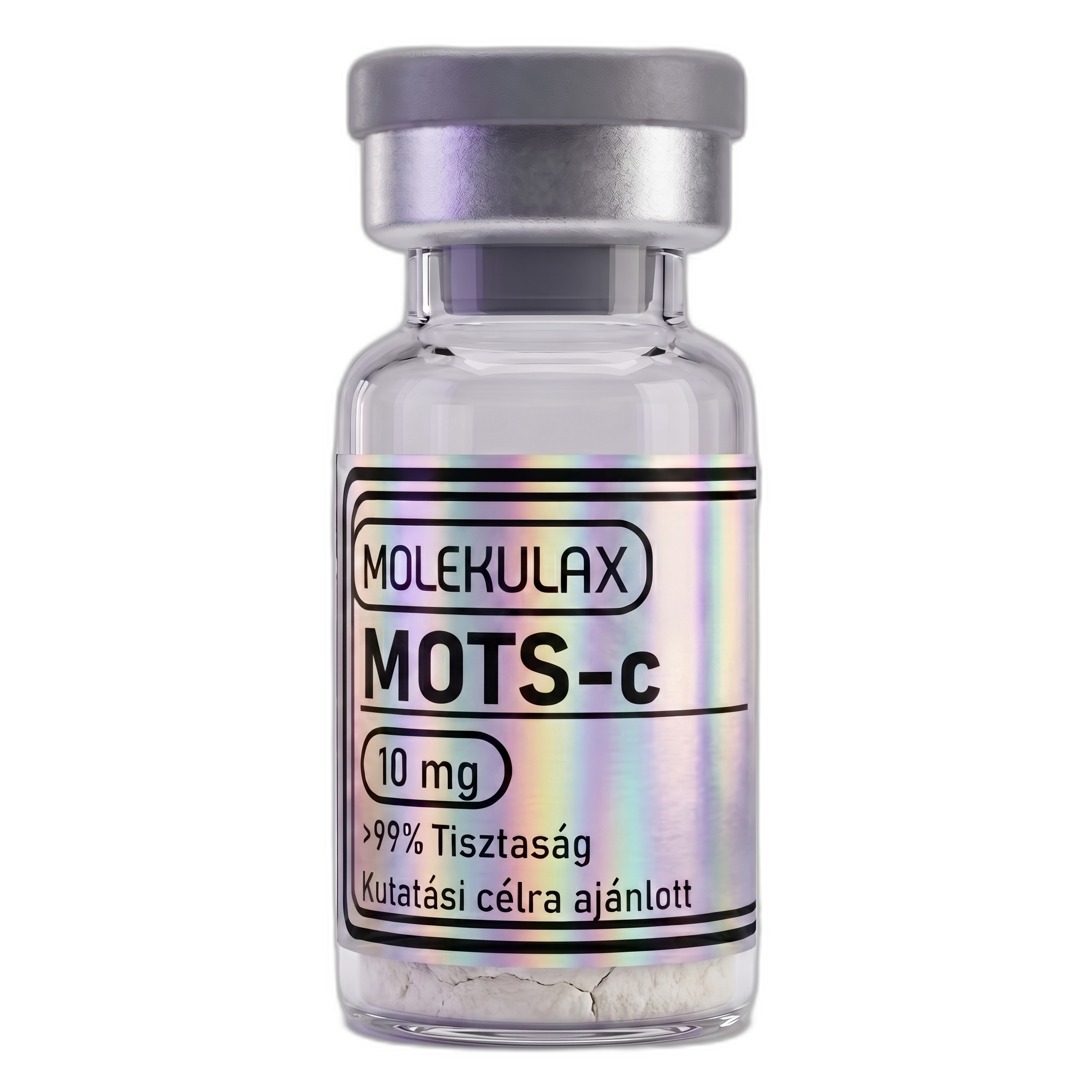
DETAILED OVERVIEW
What is MOTS-c?
MOTS-c is a peptide the body makes itself, a short protein chain of 16 amino acids that forms in the mitochondria (the energy-producing parts of cells). It has not been approved as a medicine anywhere, but it has turned up on the black market as a research peptide.
It works by switching on an enzyme called AMPK, the cell's energy sensor, in a way similar to metformin, a diabetes medicine. In mice it prevented obesity caused by a high-fat diet and improved insulin sensitivity. In humans only early studies have been done so far: its effect is not proven, its safety and long-term effects are unknown, and the fat-loss effect is small. It may cause low blood sugar, particularly during a calorie deficit or alongside insulin or other diabetes medicines. It should be avoided during pregnancy, as no safety data exist. Under the general ban on unapproved substances, it may count as banned in competitive sport.
Type
Mitochondrial peptide
Structure
16 aa
Status
Research
Route
SC
Storage
2–8°C
Metabolic support
Glucose and lipid metabolism shift favorably: insulin sensitivity improves, glycemic swings and HbA1c drop, while LDL and triglycerides normalize. Body composition refines, fat mass decreases, lean mass is preserved or grows. Appetite is regulated both centrally and peripherally (GLP-1 / GIP / glucagon pathways), so caloric intake settles into a sustainable range without constant willpower. Energy expenditure and thermogenesis rise modestly.
Cellular renewal
The peptide acts on several aging fundamentals: telomerase activation slows telomere shortening; oxidative stress drops (Nrf2 / glutathione system); gene-expression patterns epigenetically normalize. Mitochondrial energy production improves, tissue-specific stem-cell activity is supported. On skin: collagen I/III synthesis rises, wrinkle depth shrinks, hydration and elasticity improve. Long-term, biomarkers (CRP, glucose, lipids) show younger patterns and epigenetic age can slow.
Community reports frequently favor either MOTS-c or 5-Amino-1MQ for fat-loss enhancement. Some users describe MOTS-c as a "Cardarine-lite," though this is generally regarded as an exaggeration. Combined with other fat-loss agents, MOTS-c may form a strong stack. It works best in already-active users, since it enhances fuel utilization rather than forcing fat burn. Improved insulin sensitivity via AMPK activation is a notable benefit, paralleling Metformin's mechanism. Anecdotal reports describe better day-to-day energy especially during steep caloric deficits – subtle but meaningful.
MOTS-c is typically administered subcutaneously. Frequency comes down to user preference. Since MOTS-c is naturally produced and levels decline with age, supplementation in older users may yield more pronounced benefits.
⚠ Not clinical evidence – based on user accounts.
Data console
Lab data
Lee C, Zeng J, Drew BG, et al. (2015). MOTS-c regulates insulin sensitivity and metabolic homeostasis. Cell Metab.
Research indications
Investigated uses and mechanisms
Weight regulation
Reduced appetite and increased energy expenditure via GLP-1 / GIP / glucagon agonism.
Type 2 diabetes
Improved insulin sensitivity and HbA1c reduction in clinical trials.
Cardiometabolic profile
Favorable shifts in lipid profile and blood pressure.
Reconstitution
How to prepare, step by step
Important
Sterile technique required. Use bacteriostatic water (BAC) only. Never distilled or tap water.
- 01
Remove the vial and bacteriostatic water (BAC) from refrigeration; let them reach room temp for 5 minutes.
- 02
Wipe both vial stoppers with an alcohol swab.
- 03
Draw 2 ml of BAC water into a sterile syringe (typical for the 5 mg vial).
- 04
Inject slowly down the side of the vial, do NOT spray directly onto the peptide powder.
- 05
Swirl gently in a circular motion until dissolved (~30 s), do not shake.
- 06
Wait for the solution to become clear. If sediment or discoloration appears, discard it.
- 07
Label the vial with reconstitution date and concentration.
- 08
Store at 2–8 °C, protected from light. Inspect visually before each use.
Quality indicators
How to recognize a pure peptide
Purity markers
4White / off-white powder
Typical appearance of sterile lyophilized peptide.
Comes with COA (Certificate of Analysis)
Independent lab analysis, ≥98% purity.
Intact, sealed vial
Rubber stopper + aluminum crimp intact, ensuring sterility.
Dissolves clear
Clear solution after reconstitution, no sediment.
Use caution
1Storage temperature
Extended room-temp exposure may reduce potency.
Do not use
2Discoloration / sediment
Yellow, cloudy or particulate solution, indicates degradation, do not use.
Damaged packaging
Cracked vial or loose cap, sterility compromised, discard.
Safety
Side effects, stop signs, contraindications
Side effects · 5
- Nausea, headache, especially during titration
- Appetite and bowel-motility shifts
- Local skin reaction at injection site
- Transient blood-sugar variability (esp. in diabetics)
- Mild heart-rate increase
Contraindications · 5
- Pregnancy and breastfeeding
- Active malignancy
- Known allergy to the peptide or its components
- Severe hepatic or renal impairment (medical consultation required)
- Age under 18
Related Peptides
Same therapeutic category
Studies
Related research and clinical findings
Telegram
Have a question about MOTS‑c?
Reach out to an advisor on Telegram. We can help you find the right peptide.
Personalized consultation
Want a detailed conversation tailored to your data?
Fill out the prep intake form (your goals, training and health data), and the advisor prepares from it to give genuinely personalized guidance.
Fill out the form~5–7 min · prep questionnaire · confidential · GDPR-compliant
The information here is strictly for educational and scientific purposes. It does not replace medical advice or clinical consultation, and it does not encourage illegal substance or pharmaceutical use. Data is sourced. When in doubt, consult your doctor.