Oxytocin
Approved medicine for childbirth and breastfeeding support; the nasal form is studied for social behaviour.
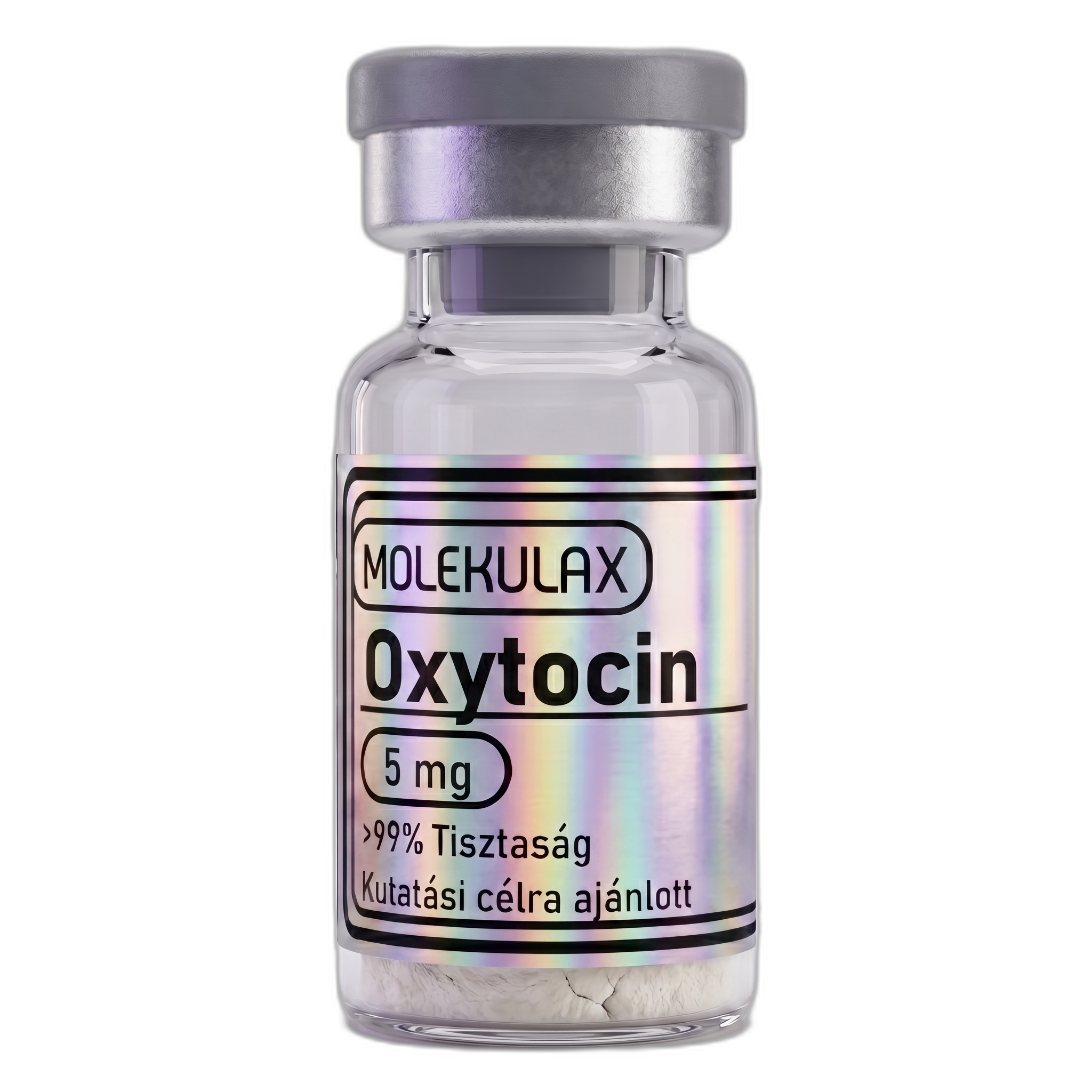
DETAILED OVERVIEW
What is Oxytocin?
Oxytocin (brand name Pitocin) is a neuropeptide made of nine amino acids, a short protein chain that acts in the nervous system. It is approved as a medicine given into a vein, used to stimulate the uterus during childbirth and to support breastfeeding.
Researchers also study oxytocin sprayed into the nose, looking at its effect on social behaviour and whether it can be used for psychiatric conditions. The approval covers the form given into a vein; the nasal use is still a matter of research.
Type
Nonapeptide
Structure
Nine amino acids (CYIQNCPLG), two cysteines joined by a sulfur bridge
Status
FDA approved (IV)
Route
IV, IN
Storage
2–8°C
Cognitive function
BDNF and NGF rise, supporting synaptic plasticity, LTP and the formation of new neural connections. Attention, working memory and task-switching measurably improve within 2–4 weeks. Neuroprotection: oxidative stress, excitotoxicity and glial inflammation drop, especially in aged, stressed or trauma-exposed brains. Mood stabilization and anxiety reduction follow via HPA-axis modulation. Effects are cumulative.
Many users describe Oxytocin as making social interactions feel more natural and less forced – almost like being more in sync with others – though effect intensity varies considerably between individuals. Anecdotal reports describe reduced "social friction" and improved bonding capacity. The compound seems to amplify the current emotional context, so positive environments can feel even better while negative environments can feel worse. Tolerance can build with frequent use, and secondary effects such as mild vasodilation and modest resting-heart-rate increases are sometimes reported. Some users also report a calming focus effect when used as a nootropic or alongside one.
Oxytocin can be administered subcutaneously, but intra-nasal administration is generally preferred because research suggests better blood-brain-barrier penetration via the nasal route. Effects are relatively short-lasting, so situational "as-needed" dosing is most common rather than daily use.
⚠ Not clinical evidence – based on user accounts.
Data console
Lab data
Research indications
Investigated uses and mechanisms
Memory & learning
Supports hippocampal synaptic plasticity.
Neuroprotection
Slows oxidative stress and neurodegenerative processes.
Focus & mood
BDNF / NGF rise; attention and emotional regulation improve.
Reconstitution
How to prepare, step by step
Important
Sterile technique required. Use bacteriostatic water (BAC) only. Never distilled or tap water.
- 01
Remove the vial and bacteriostatic water (BAC) from refrigeration; let them reach room temp for 5 minutes.
- 02
Wipe both vial stoppers with an alcohol swab.
- 03
Draw 1 ml of BAC water into a sterile syringe (typical for the 0.01 mg vial).
- 04
Inject slowly down the side of the vial, do NOT spray directly onto the peptide powder.
- 05
Swirl gently in a circular motion until dissolved (~30 s), do not shake.
- 06
Wait for the solution to become clear. If sediment or discoloration appears, discard it.
- 07
Label the vial with reconstitution date and concentration.
- 08
Store at 2–8 °C, protected from light. Inspect visually before each use.
Quality indicators
How to recognize a pure peptide
Purity markers
4White / off-white powder
Typical appearance of sterile lyophilized peptide.
Comes with COA (Certificate of Analysis)
Independent lab analysis, ≥98% purity.
Intact, sealed vial
Rubber stopper + aluminum crimp intact, ensuring sterility.
Dissolves clear
Clear solution after reconstitution, no sediment.
Use caution
1Storage temperature
Extended room-temp exposure may reduce potency.
Do not use
2Discoloration / sediment
Yellow, cloudy or particulate solution, indicates degradation, do not use.
Damaged packaging
Cracked vial or loose cap, sterility compromised, discard.
Safety
Side effects, stop signs, contraindications
Contraindications · 5
- Pregnancy and breastfeeding
- Active malignancy
- Known allergy to the peptide or its components
- Severe hepatic or renal impairment (medical consultation required)
- Age under 18
Related Peptides
Same therapeutic category
Telegram
Have a question about Oxytocin?
Reach out to an advisor on Telegram. We can help you find the right peptide.
Personalized consultation
Want a detailed conversation tailored to your data?
Fill out the prep intake form (your goals, training and health data), and the advisor prepares from it to give genuinely personalized guidance.
Fill out the form~5–7 min · prep questionnaire · confidential · GDPR-compliant
The information here is strictly for educational and scientific purposes. It does not replace medical advice or clinical consultation, and it does not encourage illegal substance or pharmaceutical use. Data is sourced. When in doubt, consult your doctor.