Clomid (Clomiphene Citrate)
Clomiphene citrate, Merrell 1956 synthesis, FDA-approved (1967) for female infertility (ovulatory dysfunction). Racemic mixture (~62% zuclomiphene estrogenic + ~38% enclomiphene antiestrogenic). The latter is the PCT-active half. Off-label male hypogonadism + AAS-PCT secondary-standard SERM.



The links above are labelled third-party affiliate links. MolekulaX does not sell and does not verify product quality.
Related comparisons
Nolvadex vs Clomid vs EnclomipheneDETAILED OVERVIEW
What is Clomid (Clomiphene Citrate)?
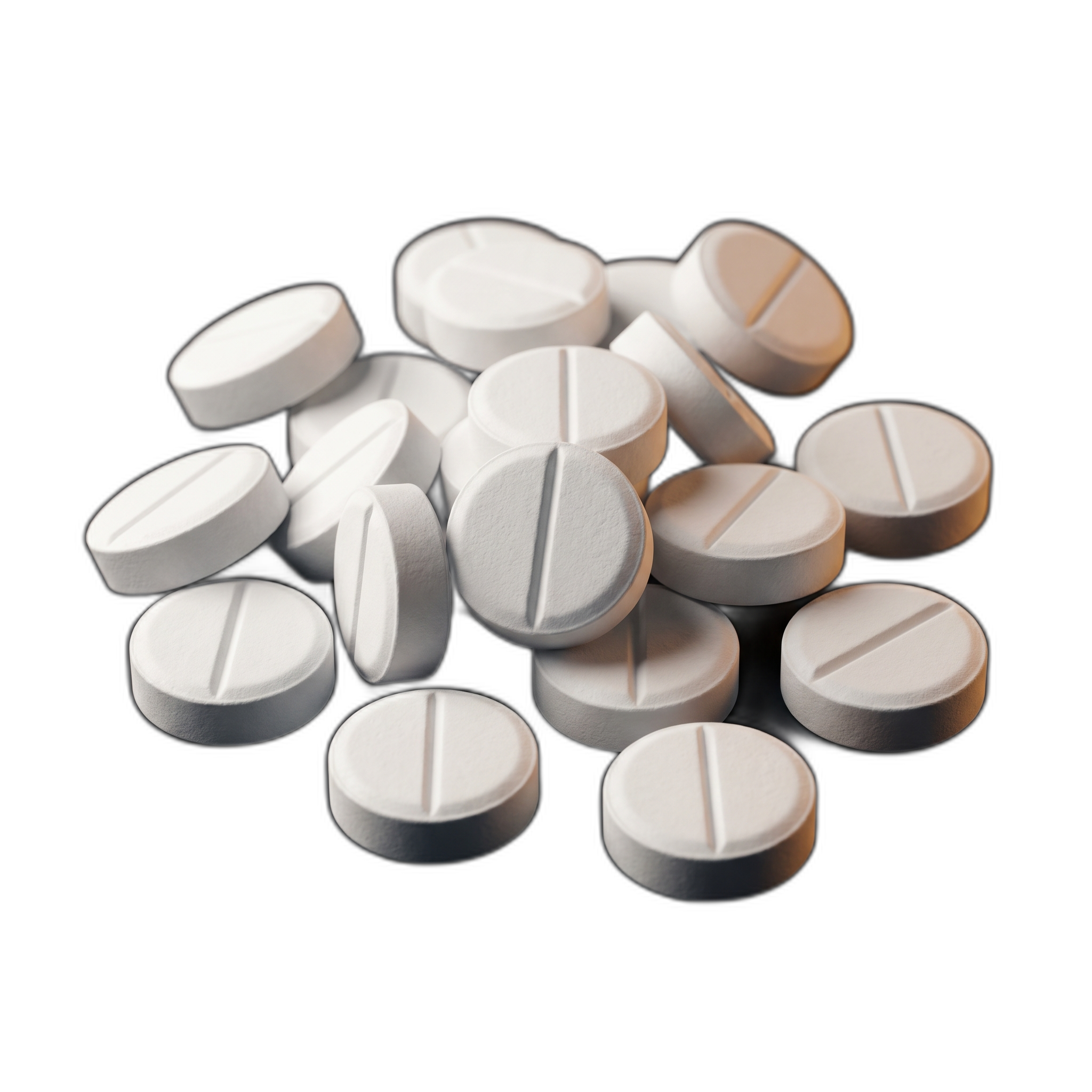
Clomid (clomiphene citrate) is a non-steroidal triphenylethylene-class SERM, synthesized in 1956 by Frank Palopoli at Merrell Dow Pharmaceuticals. FDA approval in 1967 for female anovulatory infertility – today the classic first-line step in ovulation-induction protocols. The molecule's unique dual structure is a milestone in SERM history: synthesized as a racemic mixture, ~62% zuclomiphene (cis-isomer, estrogenic partial agonist, long half-life ~5-7 weeks with accumulation) and 38% enclomiphene (trans-isomer, anti-estrogenic, ~5-day half-life). PCT activity is driven primarily by the enclomiphene half: competitive ER-α antagonism at the pituitary frees GnRH secretion, so LH/FSH rise → endogenous testosterone recovery. The zuclomiphene half slowly accumulates and delivers weak intrinsic estrogenic activity – this gives Clomid its characteristic "emotional" mood profile (depression, sensitivity, episodic comical tears). Clomid is therefore effective but a "dirty" SERM: enclomiphene activity drives a stronger HPTA restart than Nolvadex (especially the FSH effect), but mood disturbance is more common. Modern AAS-PCT golden-standard: Nolvadex first, Clomid as backup or stack (Karavolos 2015). WADA-banned for male competitors (S4).
Mechanism
Non-steroidal SERM, racemic mixture (62% zuclo + 38% enclo)
Dosing (PCT)
50 mg/day × 1-2 weeks, then 25 mg/day × 2-4 weeks
Half-life
Zuclomiphene ~5-7 weeks accumulating / enclomiphene ~5 days
Onset
LH rise 5-10 days, Test recovery 3-4 weeks
Legal status
FDA + EMA Rx (female indication), off-label male hypogonadism, WADA S4 (banned)
No anecdote collected yet.
Data console
Lab data
Wu YC, Sung WW . Clomiphene Citrate Treatment as an Alternative Therapeutic Approach for Male Hypogonadism: Mechanisms and Clinical Implications.. Pharmaceuticals (Basel).
Katz DJ, Nabulsi O, Tal R, Mulhall JP . Outcomes of clomiphene citrate treatment in young hypogonadal men.. BJU Int.
Wiehle RD, Fontenot GK, Wike J, Hsu K, Nieschlag E, Saadabadi A . Enclomiphene citrate stimulates testosterone production while preventing oligospermia: a randomized phase II clinical trial comparing topical testosterone.. Fertil Steril.
Rahnema CD, Lipshultz LI, Crosnoe LE, Kovac JR, Kim ED . Anabolic steroid-induced hypogonadism: diagnosis and treatment.. Fertil Steril.
Earl JA, Kim ED . Enclomiphene citrate: A treatment that maintains fertility in men with secondary hypogonadism.. Expert Rev Endocrinol Metab.
Safety
Side effects, stop signs, contraindications
Side effects · 7
- Mood disturbance: emotional lability, depressed mood, irritability, tearfulness (driven by the zuclomiphene isomer's central nervous-system estrogen-receptor agonism, mild-to-moderate in roughly 40-50% of users).
- Visual disturbances: scintillating scotoma, blurred vision, light sensitivity, afterimages. Usually dose-dependent (chronic >100 mg/day) and reversible on discontinuation, but persistent visual impairment is reported in rare cases.
- Estradiol elevation (E2 rebound): increased testicular estradiol production via raised LH, plus the weak intrinsic estrogenic activity of zuclomiphene. Can cause water retention, gynecomastia flare-ups and headache; more pronounced than with Nolvadex.
- Headache, nausea, hot flushes and dizziness: common estrogen-receptor-modulator side effects, generally mild and dose-dependent.
- Mild rise in blood glucose (fasting glucose) via an indirect metabolic effect of zuclomiphene; warrants extra monitoring in diabetes or prediabetes.
- Ovarian hyperstimulation syndrome (OHSS) and multiple pregnancy with female ovulation-induction use: abdominal distension, enlarged ovaries and, in severe cases, fluid accumulation (not relevant to male PCT use).
- Rare cholestasis and liver-enzyme elevation: documented as a rare event in fertility trials; it is not 17-alpha-alkylated, so overall hepatotoxicity is low.
Contraindications · 7
- Pregnancy (Category X): clomiphene can cause fetal harm and is strictly contraindicated during pregnancy; pregnancy must be excluded before treatment in women.
- Psychiatric history (major depression, bipolar disorder, severe anxiety): the mood lability and depressive effect can trigger or worsen the condition, so it is contraindicated or requires close psychiatric supervision.
- Active liver disease or hepatic dysfunction: a relative contraindication due to hepatic metabolism and the rare cholestasis risk; avoid in liver disease.
- Pre-existing visual disturbance: clomiphene can cause visual-field and vision complaints, so treatment is contraindicated or should be started only under ophthalmologic monitoring if a visual disturbance is present.
- Undiagnosed abnormal uterine bleeding or estrogen-dependent tumor (e.g. history of ovarian tumor): must be excluded before treatment, as hormonal stimulation may worsen it.
- Untreated thyroid or adrenal dysfunction, or pituitary tumor: these must be diagnosed and treated before starting, as they distort the HPTA-axis response.
- Competitive sport: listed on the WADA prohibited list (S4.3 estrogen-receptor modulator), banned both in- and out-of-competition for male athletes.
Related Performance Compounds
Same therapeutic category
Studies
Related research and clinical findings
Clomiphene Citrate Treatment as an Alternative Therapeutic Approach for Male Hypogonadism: Mechanisms and Clinical Implications.
Wu YC, Sung WW
Outcomes of clomiphene citrate treatment in young hypogonadal men.
Katz DJ, Nabulsi O, Tal R, Mulhall JP
Enclomiphene citrate stimulates testosterone production while preventing oligospermia: a randomized phase II clinical trial comparing topical testosterone.
Wiehle RD, Fontenot GK, Wike J, Hsu K, Nieschlag E, Saadabadi A
Anabolic steroid-induced hypogonadism: diagnosis and treatment.
Rahnema CD, Lipshultz LI, Crosnoe LE, Kovac JR, Kim ED
Enclomiphene citrate: A treatment that maintains fertility in men with secondary hypogonadism.
Earl JA, Kim ED
Telegram
Have a question about Clomid (Clomiphene Citrate)?
Reach out to an advisor on Telegram. Performance compounds are presented with a harm-reduction approach, based on peer-reviewed evidence.
Personalized consultation
Want a detailed conversation tailored to your data?
Fill out the prep intake form (your goals, training and health data), and the advisor prepares from it to give genuinely personalized guidance.
Fill out the form~5–7 min · prep questionnaire · confidential · GDPR-compliant
The information here is for educational and scientific purposes only. Performance-enhancing compounds (AAS, prohormones, stimulants, doping agents) are illegal without prescription in Hungary and most of the EU, and carry serious health and legal risks. WADA bans them in competitive sport. This is NOT a usage guide, and we do not encourage any illegal use. If you do use them, medical supervision and regular bloodwork are ESSENTIAL. Severe endocrine, cardiovascular, hepatic and psychiatric side effects are possible.