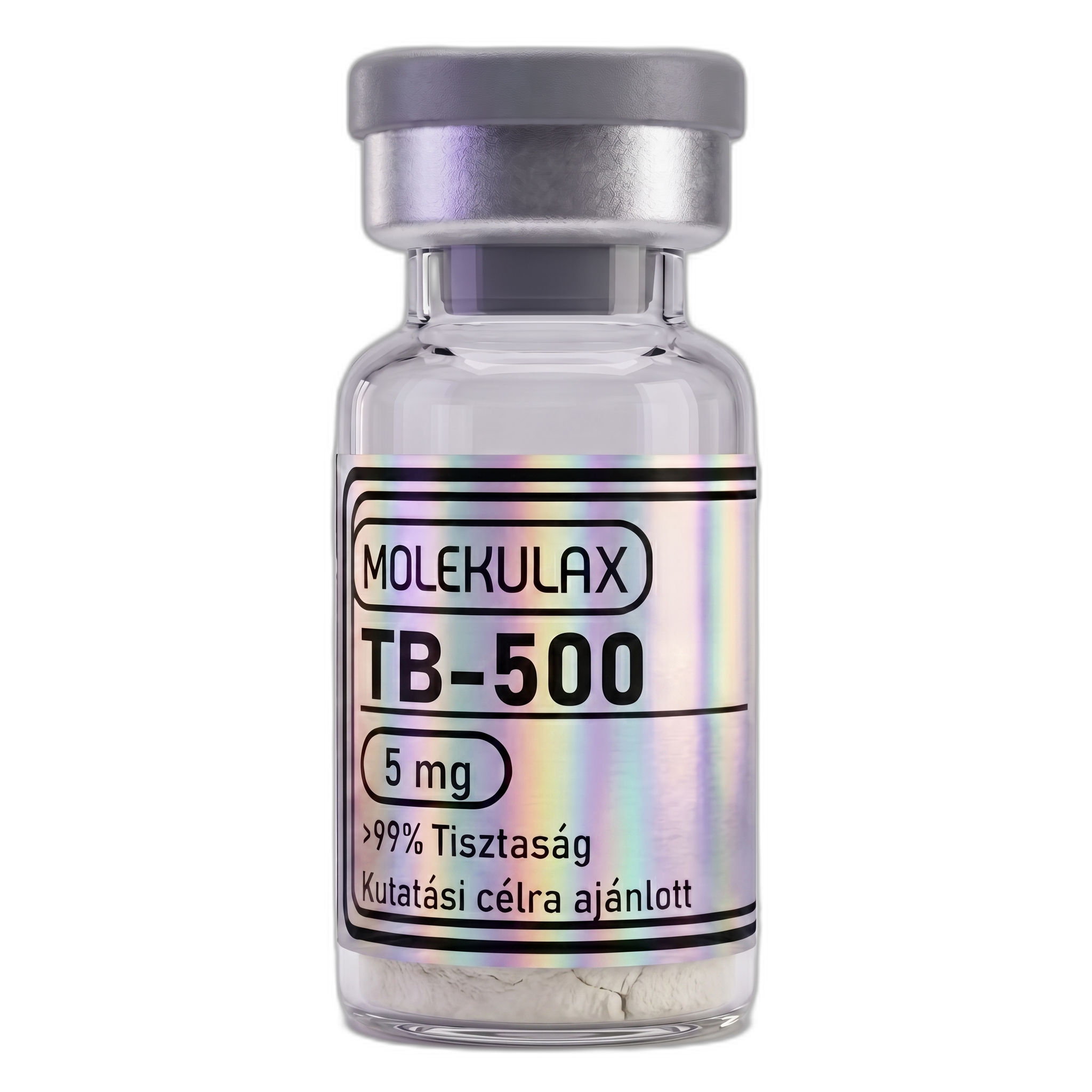
TB‑500
Thymosin β4: actin binding, cell migration and tissue repair



The links above are labelled third-party affiliate links. MolekulaX does not sell and does not verify product quality.
Related comparisons
BPC-157 vs TB-500DETAILED OVERVIEW
What is TB-500?
TB-500 is a synthetic fragment of Thymosin Beta-4 (Tβ4), an actin-binding protein naturally found in the human body. Present in nearly every human and animal cell, particularly concentrated in platelets and healing wound tissue. Molecular action: prevents actin polymerization → enhances cell migration and tissue repair. It also promotes angiogenesis (VEGF pathway) and reduces inflammatory cytokines.
Type
Actin-binding polypeptide (Thymosin β4)
Structure
43 amino acid full chain
Molecular weight
~4963 Da
Target area
Muscle, tendon, heart, nerve
Storage
2–8°C (reconstituted)
Stability
25–30 days (reconstituted)
Tissue regeneration
Tendons, muscles, ligaments, GI mucosa and skin heal faster thanks to direct cell-level signaling: it activates fibroblast migration, angiogenesis (VEGF pathway) and reduces pro-inflammatory cytokines (IL-6, TNF-α). Chronic, slow-healing injuries see functional improvement; pain and swelling drop. Post-workout recovery windows shorten by 30–50%, allowing more training volume. Effects are documented even in enthesopathy, tendinitis and GI ulcers.
Community accounts describe TB-500 used alone in self-experimentation contexts, with one older user reporting greater flexibility during typical gym stretching routines – a benefit they attributed to the peptide rather than to confounding training factors. Reports remain preliminary, but the signal is consistent enough across community members to be noted.
Dosing depends on goals. TB-500 is typically administered subcutaneously, often during a loading phase followed by maintenance, though loading is not strictly required. Because it acts systemically, the local "site-of-injury" injection advantage often discussed with BPC-157 does not apply here.
⚠ Not clinical evidence – based on user accounts.
Data console
Lab data
Goldstein AL (2005). Thymosin beta4: actin-sequestering protein moonlights to repair injured tissues.. Trends Mol Medicine.
Zhang Y, Dong Q, Bian X, et al. (2004). Recombinant human thymosin beta 4 improves ischemic cardiac dysfunction in mice and patients with acute ST-segment elevation myocardial infarction after reperfusion.. Nature.
Crockford D, Turjman N, Allan C, et al. (2010). Thymosin beta 4: structure, function, and biological properties supporting current and future clinical applications.. Annals NY Academy of Sciences.
Research indications
Investigated uses and mechanisms
Soft-tissue regeneration
Faster healing of tendons, muscles, ligaments after injury.
GI tract protection
Gut-mucosal regeneration; symptom reduction in inflammatory bowel conditions.
Inflammation regulation
Decrease in chronic inflammation markers (CRP, IL-6).
Neural regeneration
Supports functional recovery of peripheral nerve injuries.
Reconstitution
How to prepare, step by step
Important
Sterile technique required. Use bacteriostatic water (BAC) only. Never distilled or tap water.
- 01
Remove the vial and bacteriostatic water (BAC) from refrigeration; let them reach room temp for 5 minutes.
- 02
Wipe both vial stoppers with an alcohol swab.
- 03
Draw 2 ml of BAC water into a sterile syringe (typical for the 5 mg vial).
- 04
Inject slowly down the side of the vial, do NOT spray directly onto the peptide powder.
- 05
Swirl gently in a circular motion until dissolved (~30 s), do not shake.
- 06
Wait for the solution to become clear. If sediment or discoloration appears, discard it.
- 07
Label the vial with reconstitution date and concentration.
- 08
Store at 2–8 °C, protected from light. Inspect visually before each use.
Quality indicators
How to recognize a pure peptide
Purity markers
4White / off-white powder
Typical appearance of sterile lyophilized peptide.
Comes with COA (Certificate of Analysis)
Independent lab analysis, ≥98% purity.
Intact, sealed vial
Rubber stopper + aluminum crimp intact, ensuring sterility.
Dissolves clear
Clear solution after reconstitution, no sediment.
Use caution
1Storage temperature
Extended room-temp exposure may reduce potency.
Do not use
2Discoloration / sediment
Yellow, cloudy or particulate solution, indicates degradation, do not use.
Damaged packaging
Cracked vial or loose cap, sterility compromised, discard.
Interactions & stacks
What to combine and what to avoid
GHK-Cu
SynergisticCopper peptide: skin regeneration and epigenetic modulation
BPC-157
SynergisticGastric pentadecapeptide: tissue regeneration and healing
TB-500
SynergisticBPC-157 + TB-500, foundational recovery duo.
Vitamin C / Zinc / B-complex
SynergisticSupports collagen synthesis and antioxidant capacity.
Collagen
ComplementaryAmino-acid substrate + peptide signaling combine.
Caffeine
Requires timingCompatible with morning dosing; avoid late-day stacking.
NSAIDs (Ibuprofen, ASA)
Use cautionLong-term concurrent use may blunt regenerative effects.
Alcohol
AvoidReduces recovery and increases side-effect risk.
Safety
Side effects, stop signs, contraindications
Side effects · 4
- Mild injection-site pain
- Transient nausea / dizziness (rare)
- Mild dry mouth
- Flushing (in some cases)
Contraindications · 5
- Pregnancy and breastfeeding
- Active malignancy
- Known allergy to the peptide or its components
- Severe hepatic or renal impairment (medical consultation required)
- Age under 18
Related Peptides
Same therapeutic category
Studies
Related research and clinical findings
Thymosin beta4: actin-sequestering protein moonlights to repair injured tissues.
Goldstein AL
TB-500 induces cell migration, angiogenesis and tissue regeneration in injured areas.
Recombinant human thymosin beta 4 improves ischemic cardiac dysfunction in mice and patients with acute ST-segment elevation myocardial infarction after reperfusion.
Zhang Y, Dong Q, Bian X, et al.
After myocardial infarction, Tβ4 reduced cardiomyocyte apoptosis and improved cardiac function in mice.
Thymosin beta 4: structure, function, and biological properties supporting current and future clinical applications.
Crockford D, Turjman N, Allan C, et al.
Comprehensive review of Tβ4 structure, wound-healing and cardiovascular clinical applications.
Telegram
Have a question about TB‑500?
Reach out to an advisor on Telegram. We can help you find the right peptide.
Personalized consultation
Want a detailed conversation tailored to your data?
Fill out the prep intake form (your goals, training and health data), and the advisor prepares from it to give genuinely personalized guidance.
Fill out the form~5–7 min · prep questionnaire · confidential · GDPR-compliant
The information here is strictly for educational and scientific purposes. It does not replace medical advice or clinical consultation, and it does not encourage illegal substance or pharmaceutical use. Data is sourced. When in doubt, consult your doctor.